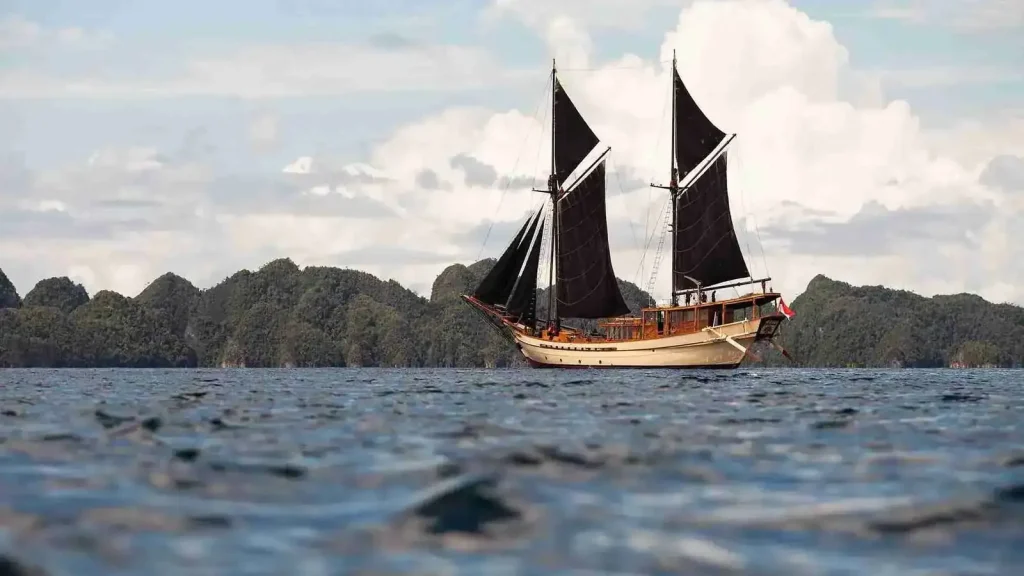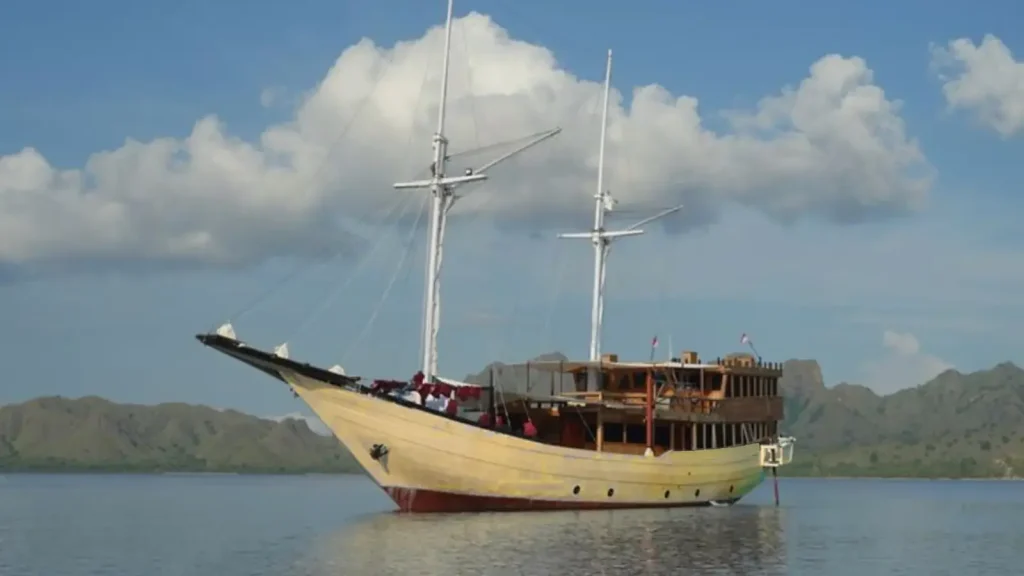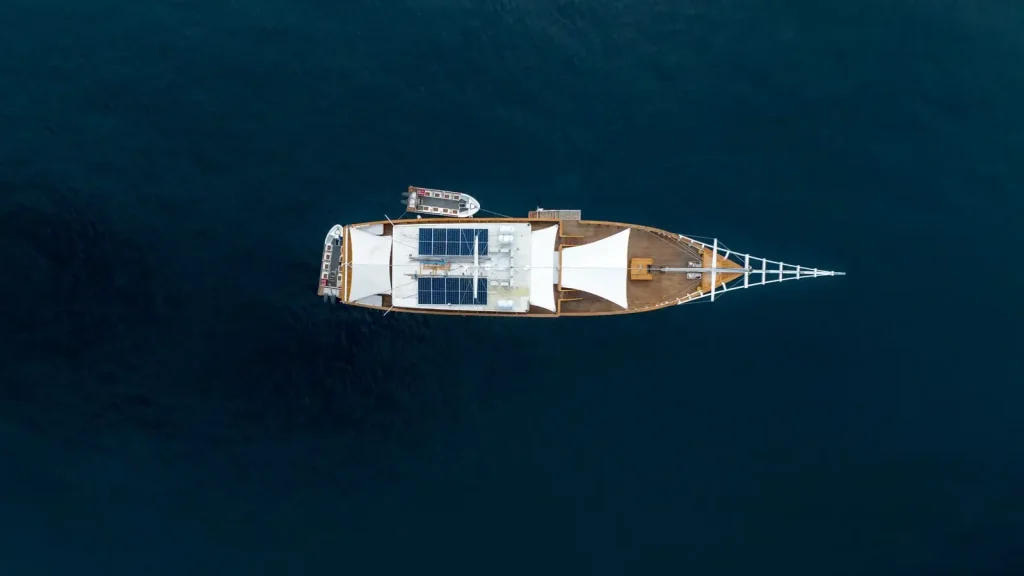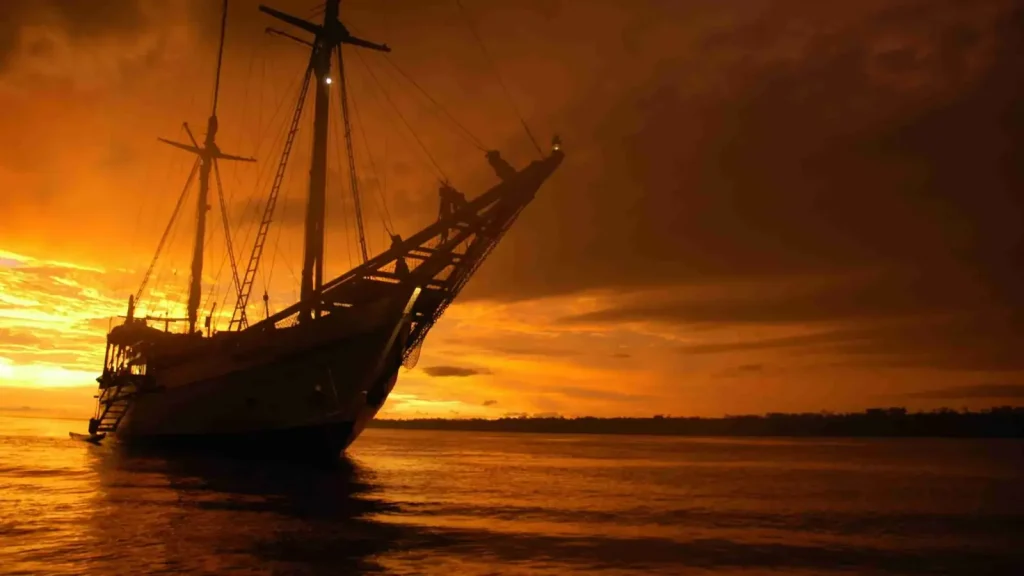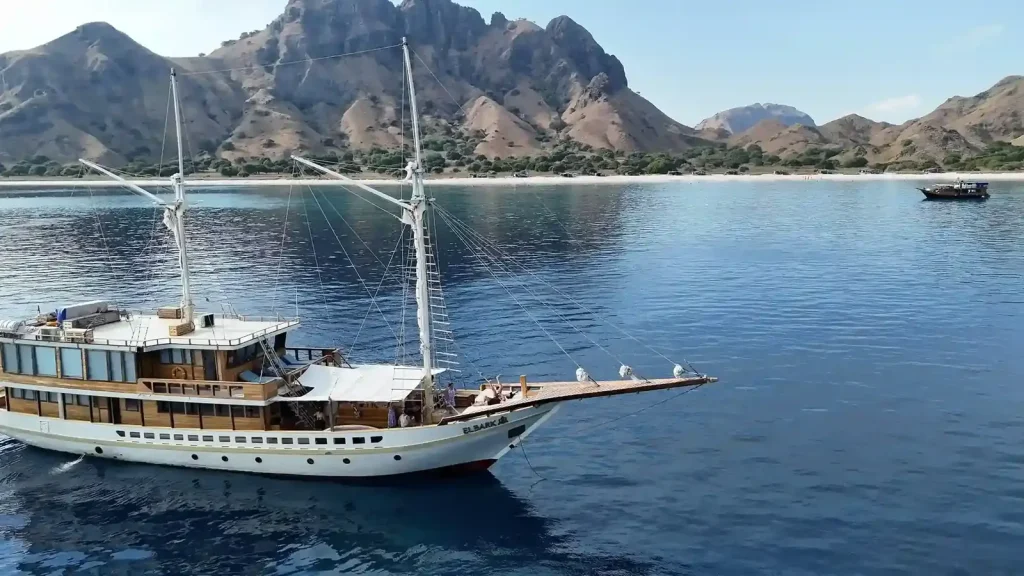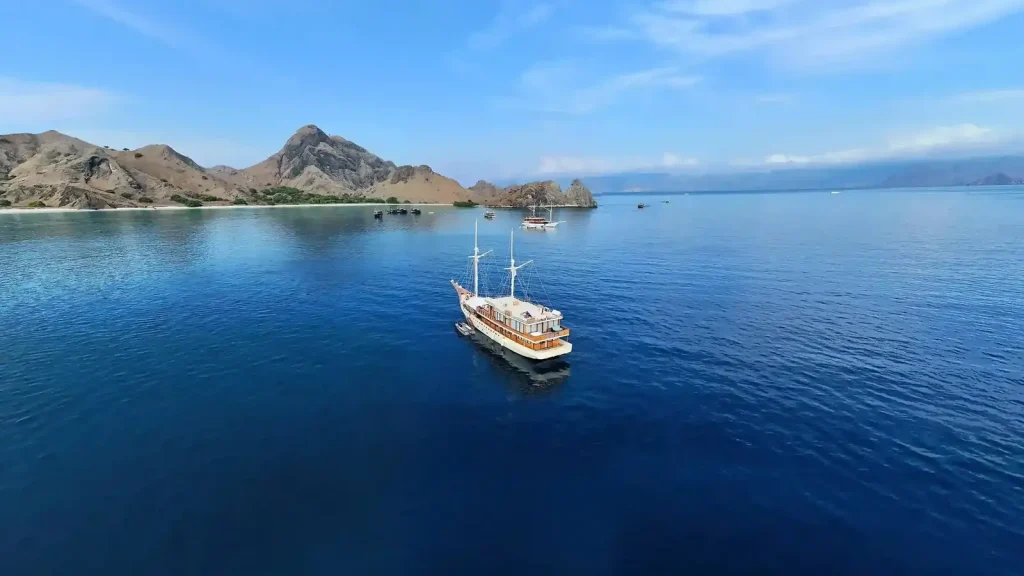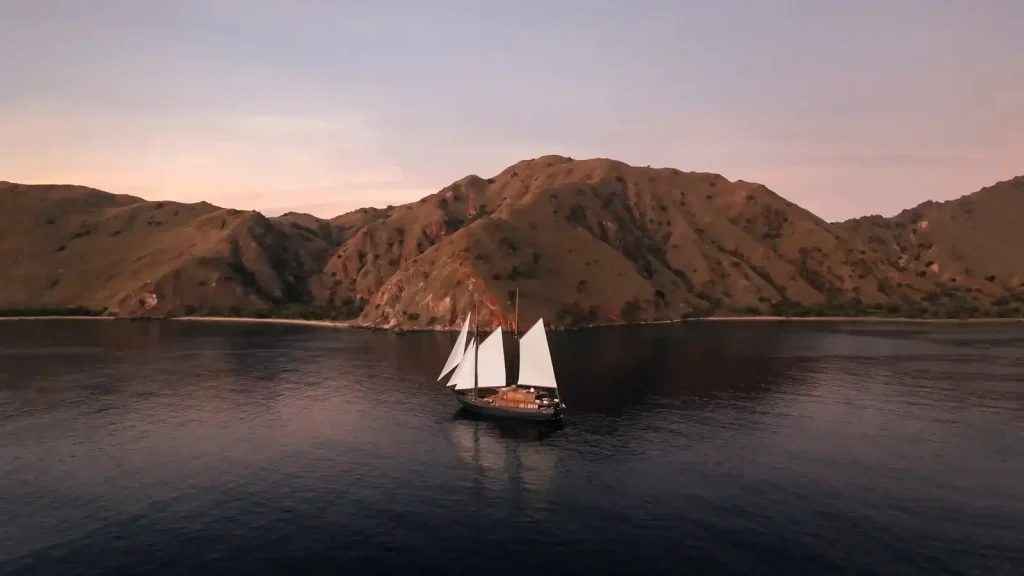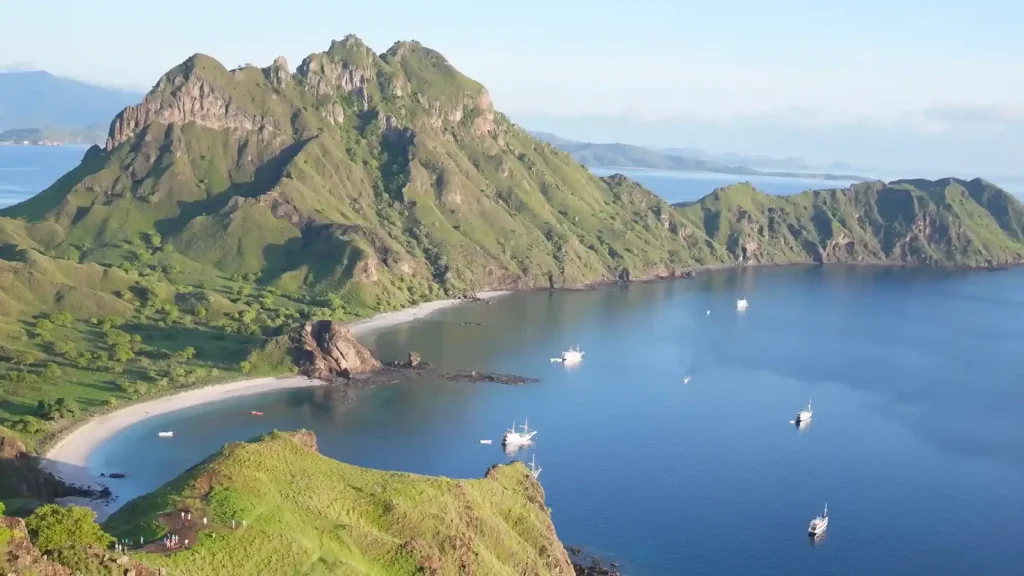
- Heritage & Craft: Phinisis are handcrafted wooden vessels, a UNESCO-recognized art form, offering a tangible connection to Indonesia’s maritime history.
- Performance & Speed: Modern yachts use advanced composite materials and powerful engines, enabling cruising speeds often double or triple that of a phinisi.
- Onboard Lifestyle: The phinisi experience is about slow travel and communal, open-air living, while yachts provide the private, enclosed amenities of a floating five-star hotel.
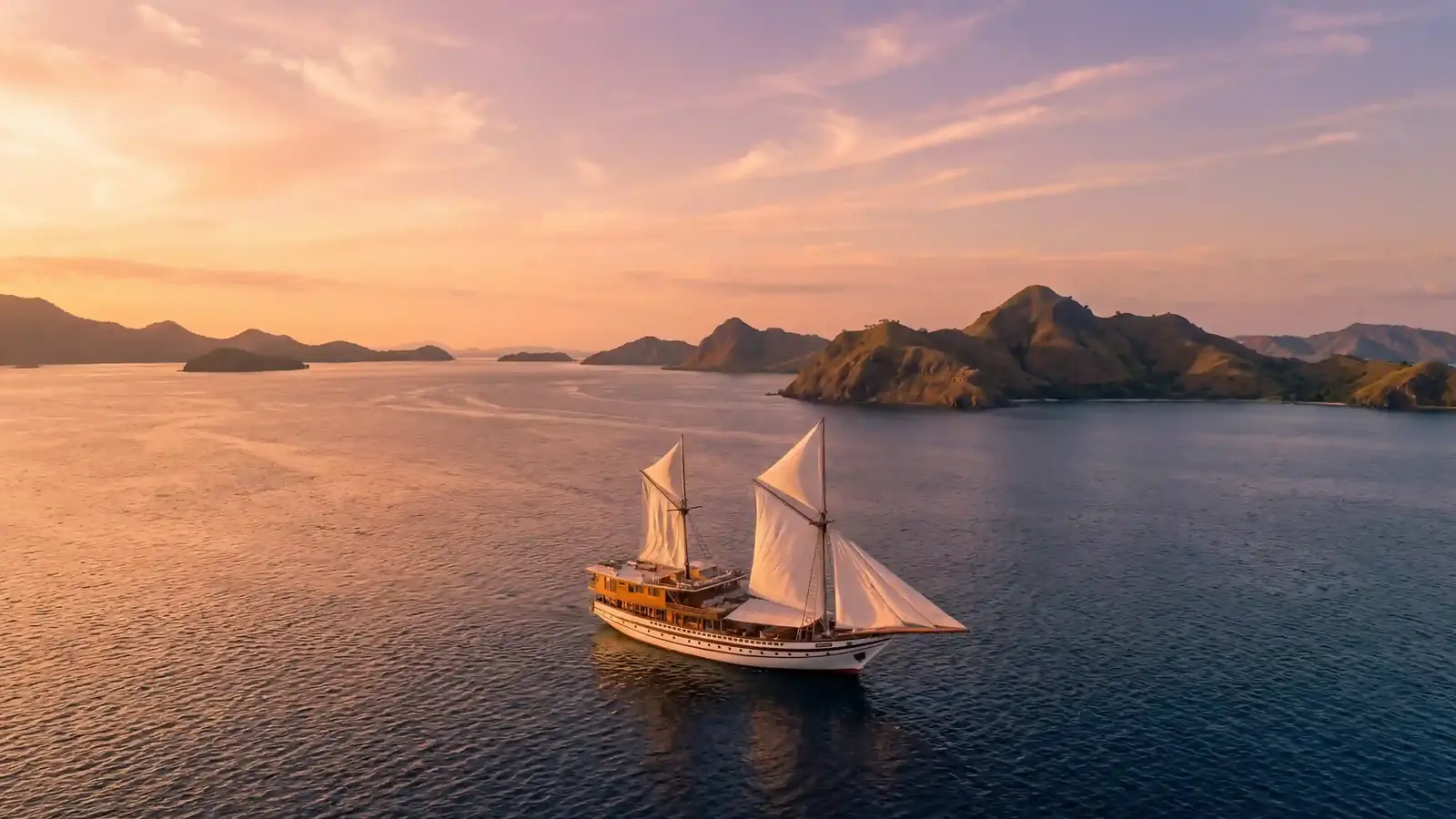
The first sound is the gentle lapping of water against a heavy wooden hull, a rhythmic percussion that has scored the dawns in this archipelago for centuries. Sunlight, thick and golden, spills across a teak deck, warming the air, which carries the faint, spicy scent of clove and saltwater. From the bow of this majestic phinisi, the ancient, dragon-like islands of Komodo National Park rise from a turquoise sea. A few kilometers to port, a sleek, white motor yacht cuts a silent, surgical line across the horizon, its profile precision engineering. Both vessels are apex predators in the world of luxury travel, yet they offer fundamentally different keys to unlocking this primal paradise. The question for the discerning traveler is not simply about passage, but about perspective. It’s a debate between soul and science, tradition and technology—a the heart of traditional phinisi construction vs. modern yacht design.
The Soul of the Sea: Unpacking Phinisi Heritage and Craftsmanship
To understand a phinisi is to understand a lineage. These are not merely boats; they are floating artifacts, the direct descendants of a boatbuilding tradition so profound that in 2017, UNESCO inscribed the “Art of boatbuilding in South Sulawesi” onto its list of the Intangible Cultural Heritage of Humanity. The craft is centered among the Konjo people of Ara, Tana Beru, and Bira, who for generations have built these vessels entirely by hand and, remarkably, without blueprints. I once spent a week in a Tana Beru shipyard, and the process, as explained by master builder Haji Abdullah, is almost spiritual. Construction begins with the keel, laid in a ceremony to bless the vessel. Then, the hull planking is painstakingly fitted *before* the internal ribs are inserted—a reverse of the Western frame-first method. The primary materials are ironwood (kayu ulin) for the keel and structural members, a timber so dense (over 1.0 g/cm³) it sinks in water, and teak for the decks and superstructure. A single 35-meter phinisi can require over 150 cubic meters of timber and take a team of 10 craftsmen up to 18 months to complete, the labor-intensive nature of this art form.
The Modern Marvel: Engineering and Precision of a Yacht
In stark contrast to the organic, intuitive process of phinisi building, the modern superyacht is a product of meticulous science and industrial precision. The journey begins not on a beach but on a computer screen, with naval architects using sophisticated CAD software to model every curve and calculate hydrodynamic efficiency to a fraction of a percent. The materials themselves are from a different world: vacuum-infused fiberglass, high-strength aluminum, or even weight-saving carbon fiber composites. These materials offer immense strength with a fraction of the weight of tropical hardwoods, and they are impervious to the marine borers that are the eternal enemy of wooden boats. I’ve toured the Feadship yards in the Netherlands, where the environment is more akin to a laboratory than a workshop. Hulls are formed in giant, precise molds, and components are laser-cut for a perfect fit. The technological sophistication extends below the waterline, with features like zero-speed gyroscopic stabilizers that can reduce roll at anchor by up to 95%, creating an uncannily still platform. Propulsion is delivered by twin diesel engines from manufacturers like MTU or Caterpillar, capable of pushing a 40-meter yacht to speeds exceeding 25 knots, a velocity a phinisi’s displacement hull could never safely achieve. This is a vessel engineered for performance, a machine perfected for conquering distance in absolute comfort.
Onboard Experience: Space, Ambiance, and the Definition of Luxury
The philosophical divide between these two vessel types is most apparent in how they allocate space. The phinisi, with its wide beam—often reaching 8 meters on a 40-meter vessel—is a master of outdoor living. The luxury is in the expanse. I recall a charter on the Lamima, a 65-meter phinisi, where the main deck felt as spacious as a private resort terrace. These boats are designed for a communal, open-air existence, with vast sundecks, shaded alfresco dining areas, and comfortable daybeds that invite you to connect with the surrounding seascape. The living happens *on* the boat, not just *in* it. Cabins are comfortable and often luxurious, but they serve as private retreats from the main event on deck. A modern motor yacht of a similar length, by contrast, often dedicates more of its volume to the interior. The design prioritizes climate-controlled saloons, state-of-the-art cinemas, and opulent, multi-room master suites. The experience can feel more private and enclosed, a floating villa where the world outside is viewed through panoramic windows. As a leading charter broker, Jonathan Beckett of Burgess Yachts, once told me, “The yacht client is buying a self-contained world of perfect service and amenities. The phinisi client is buying a platform from which to experience the outside world.” Discerning travelers must understand this distinction, which is central to our methodology for evaluating Komodo accommodations; it’s about matching the vessel’s philosophy to the guest’s expectations.
Archipelago: Performance, Itinerary, and Environmental Footprint
In the vast Indonesian archipelago, which spans over 5,000 kilometers from east to west, how a vessel moves is as important as how it feels. A phinisi is built for a different pace of life. Its heavy displacement hull and modest engine power result in a leisurely cruising speed of 8 to 10 knots. This makes it the ideal platform for deep, immersive exploration of a single region, like Komodo or Raja Ampat. The journey itself becomes the destination. A trip from Labuan Bajo to the northern dive sites of Komodo National Park is a day of slow, scenic passage, not a high-speed transit. A modern yacht, however, is a tool for covering ground. With cruising speeds of 15-20 knots, it can link disparate destinations with ease. One could wake up among the dragons of Rinca, lunch off the coast of Sumbawa, and watch the sunset at Moyo Island, 200 nautical miles away—a feat impossible on a phinisi. This performance comes at a cost. A 45-meter yacht cruising at 18 knots can consume over 500 liters of diesel per hour, whereas a phinisi motoring at 8 knots might use less than 80 liters. This staggering difference in consumption has profound implications for both charter cost and environmental impact, a key consideration in our commitment to sustainability. Building with locally sourced materials and promoting slower itineraries are just two ways the phinisi model can offer a more measured approach to exploring these fragile ecosystems.
The Human Element: Crew, Certification, and the Modern Synthesis
A vessel is nothing without its crew, and here again, the divergence is clear. A phinisi crew is typically 100% Indonesian, often from the same seafaring villages where the boats are built. The captain may have learned his trade from his father, navigating by instinct and an intimate knowledge of the local waters. The service is warm, genuine, and infused with a deep sense of national pride and hospitality. The crew on a modern superyacht is often international, with meticulous training and certifications from bodies like the Royal Yachting Association (RYA). The service is polished, professional, and operates with a discreet, almost invisible efficiency. The ultimate vessel, however, might be the one that merges these worlds. This is where the work of a premier builder like komodo boat construction becomes so vital. They are at the forefront of a movement creating a new breed of phinisi—vessels that retain the soul and aesthetic of the traditional design but are built with modern naval architecture principles and to the highest international safety classifications. They ensure that behind the romantic, handcrafted facade lies a vessel that meets rigorous maritime codes, a topic of critical importance we detail in our guide to safety and compliance certifications. This synthesis of heritage and engineering is producing some of the most compelling charter vessels on the water today, a fact reflected in the growing press and recognition these modern classics are receiving globally.
Quick FAQ: Traditional Phinisi Construction vs Modern Yacht
Is a phinisi safer than a modern yacht?
Safety is determined by build quality, maintenance, and crew, not vessel type. A phinisi built to modern classification standards (like those from Biro Klasifikasi Indonesia or RINA) by a reputable builder is every bit as safe as a comparably maintained modern yacht. The key is to verify the vessel’s certification and operational history.
What is the cost difference to charter?
While variable, a luxury 6-cabin phinisi in Indonesia might charter for $40,000 to $100,000 per week. A modern motor yacht of similar guest capacity, which often must be relocated from the Mediterranean or Caribbean, typically starts at $80,000 per week and can easily surpass $250,000, plus significant additional expenses for fuel and provisioning.
Can phinisis actually sail?
Yes, the traditional gaff-ketch rig with seven sails is fully functional. However, on modern charter phinisis, they are best described as motorsailers. The powerful marine engines provide primary propulsion for reliability and scheduling, while the sails are used to provide stability, reduce roll, and offer a quiet, fuel-efficient boost when the wind is favorable. They also create an undeniably magnificent spectacle.
Which is better for families with young children?
For families, the phinisi often has a distinct advantage. Its expansive, single-level open decks provide a vast, secure area for children to play, compared to the multiple, often steep staircases and more confined exterior spaces of many motor yachts. The more relaxed, communal atmosphere onboard a phinisi also tends to be very welcoming for multi-generational family groups.
Ultimately, the debate of traditional phinisi construction vs modern yacht is not about declaring a winner. It is an exercise in introspection for the traveler. Do you seek the silent, swift efficiency of a modern masterpiece, or the soulful, creaking cadence of a living piece of history? The most exciting development in this space is the blurring of these lines. The modern phinisi, born from a respect for tradition but executed with the precision of contemporary engineering, offers a compelling third way—a vessel that is both a destination in itself and a perfect key to the wonders of the archipelago. For those looking to commission a vessel that marries timeless Indonesian artistry with uncompromising modern standards, the journey begins with a conversation. Explore the possibilities with komodo boat construction and define your own legacy on the water.