
- Months 1-4: Sourcing and seasoning of hardwoods like ironwood and teak.
- Months 5-12: Ceremonial keel laying and meticulous hull construction.
- Months 13-24: Superstructure assembly, systems integration, and luxury interior finishing.
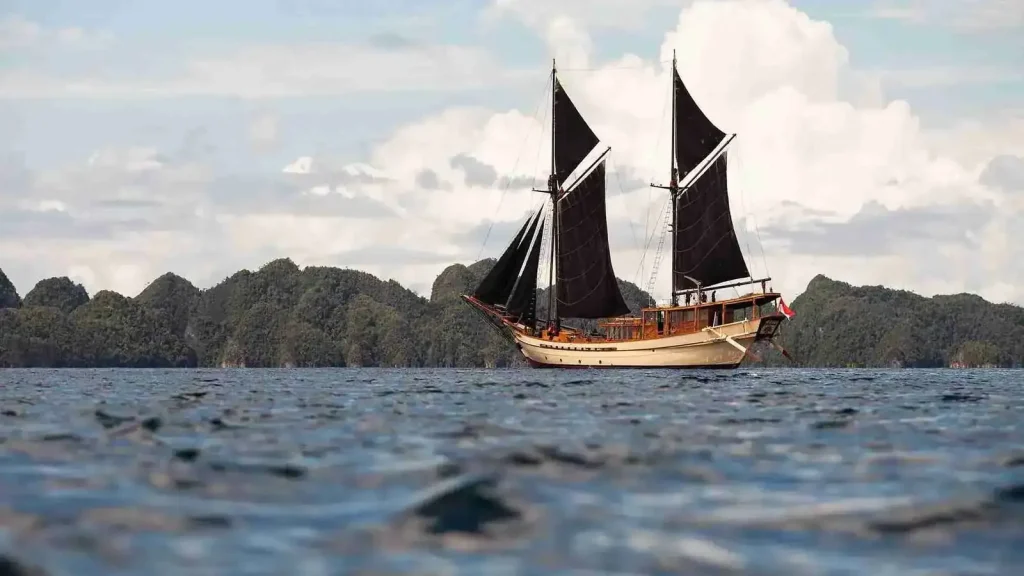
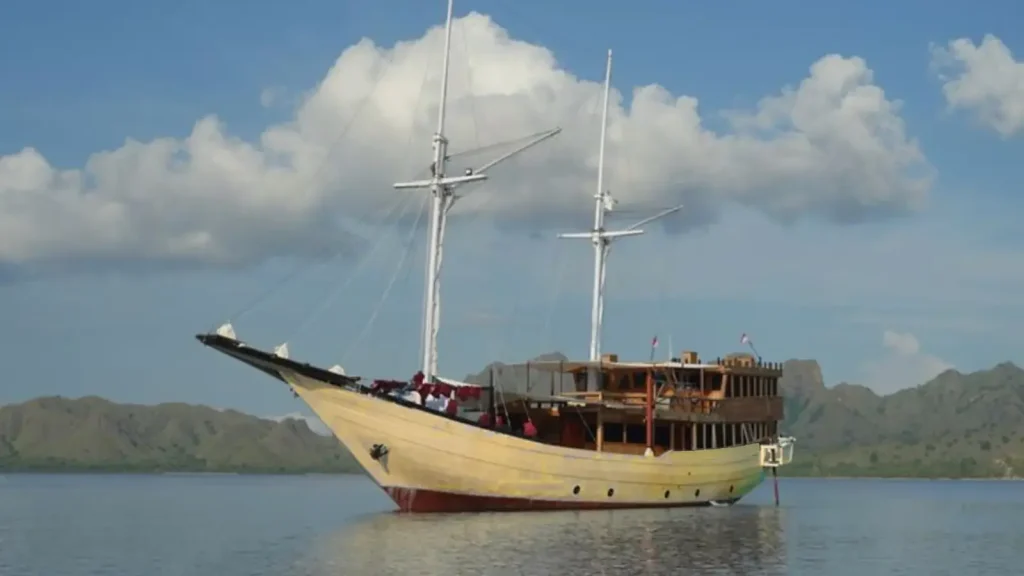
The air in Tana Beru, South Sulawesi, hangs thick with the scent of freshly sawn teak and the faint, briny tang of the Flores Sea. It’s a percussive soundscape: the rhythmic thud of mallets against wooden dowels, the high-pitched whine of a sander, the distant call to prayer. Here, on these hallowed shores, the skeleton of a future queen of the Komodo seas is taking shape. This is the birthplace of the Phinisi, and understanding the intricate, season-bound dance of its creation is the first step in appreciating the vessel that will carry you through the archipelago. The komodo boat construction process is not an assembly line; it is a living tradition, a timeline measured not just in months, but in monsoons, rituals, and generations of inherited skill.
The Soul of the Phinisi: Sourcing and Seasoning the Ironwood (Months 1-4)
Every great journey begins with a single step, and for a Phinisi, that step is the selection of its timber. The entire komodo boat building process timeline is predicated on the quality of its foundational materials. The hull, the very soul of the vessel, is traditionally crafted from Ulin (Eusideroxylon zwageri), or Bornean ironwood, a timber so dense it has a specific gravity of 1.04, meaning it barely floats. “The Ulin is the boat’s strength. It resists the teredo worm and the sea,” explains H. Rahman, a third-generation shipyard owner in Bulukumba. Sourcing these trees, which can be over 100 years old, is a specialized task, often taking place deep in the forests of Kalimantan during the dry season, typically from May to September, when logging roads are passable. For the decks and superstructure, builders turn to high-grade teak (Tectona grandis) from Sulawesi or Java, prized for its beauty and weather resistance. Once felled and milled, the timber begins a critical seasoning period. Ideally, wood should air-dry for at least one year for every inch of thickness, but modern demands often see this process accelerated with kiln-drying to achieve a moisture content of 12-15%. This initial phase is where a builder’s integrity is paramount, and our commitment to sustainable sourcing ensures that the forests that give life to these vessels are respected and preserved for future generations.
Laying the Keel: A Ritualistic Beginning (Month 5)
The transition from raw material to a nascent vessel is marked by a ceremony as vital as any plank or joint. The construction of a Phinisi begins not with a blueprint, but with a ritual. The master builder, or punggawa, leads a ceremony known as mappatamma, where the keel, a massive beam of ironwood that can measure over 30 meters on a larger vessel, is laid. This is a moment of profound significance for the Konjo people, the master boatbuilders of South Sulawesi. Offerings are made, prayers are recited, and the blood of a chicken or goat is often smeared on the keel to appease the spirits of the sea and forest. This act consecrates the build site and formally begins the construction. It’s a practice that underscores the deep spiritual connection between the builders and their creation. According to local shipwrights, the keel must be laid pointing northeast, a direction of good fortune. From this single piece of timber, the entire boat will grow organically. This phase, while short in the grand komodo boat building process timeline, sets the spiritual and structural foundation for the 18-plus months of intense labor that will follow, a tradition so unique it is recognized by UNESCO as an Intangible Cultural Heritage of Humanity.
Raising the Ribs: The Skeleton Takes Shape (Months 6-12)
With the keel laid, the shipyard transforms into a theater of intuition and ancestral engineering. This is where the Phinisi’s iconic shape emerges, plank by plank, without the aid of architectural drawings or CAD models. The punggawa directs his team of 15 to 20 craftsmen, working from a scale model carved from a block of wood, or more often, from a precise image held only in his mind. First, the stem and stern posts are attached to the keel. Then, the hull planking is bent and fixed into place before the internal ribs are inserted—a reverse of the Western boat-building method. This “shell-first” construction technique is a hallmark of Phinisi building. Tens of thousands of holes are drilled by hand, and wooden dowels, often made from the leftover Bitti wood, are hammered into place to join the thick Ulin planks. Every joint is sealed with a traditional caulking made from the bark of the gelam tree. It is a physically demanding, six-month period of shaping, sawing, and hammering that sees the vessel’s skeleton rise from the sands. The precision required, achieved purely by eye and experience, is remarkable and reflects our own rigorous methodology in evaluating the structural integrity and craftsmanship of the vessels we represent.
The Grand Assembly: Decking, Superstructure, and Systems (Months 13-18)
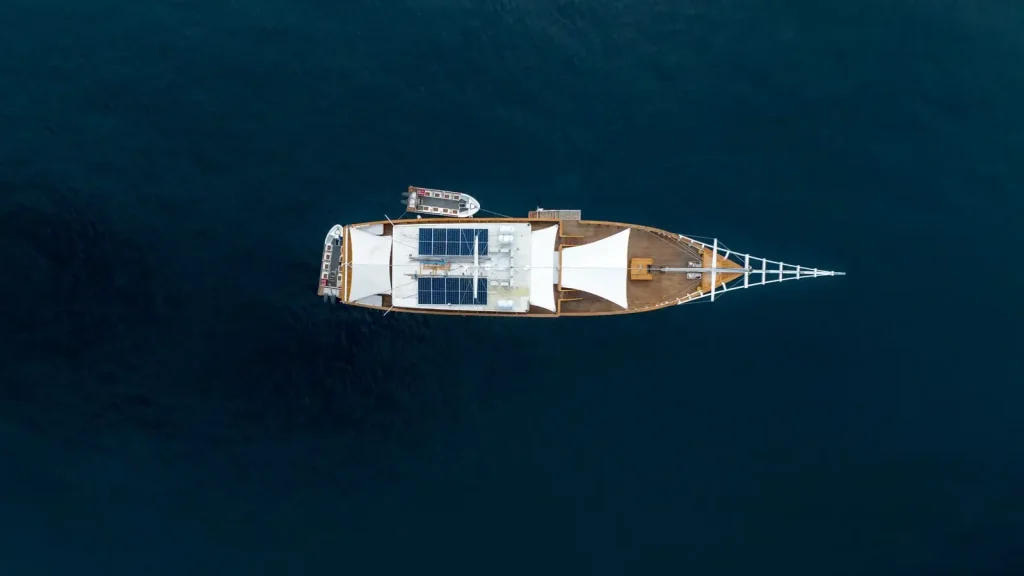
Once the hull is fully planked and deemed watertight—a milestone celebrated with another small ceremony—the focus of the build shifts from raw power to complex assembly. The character of the vessel begins to truly reveal itself as the decks are laid and the superstructure rises. This phase sees the addition of multiple levels that will house the guest cabins, salon, wheelhouse, and crew quarters. While the hull is pure tradition, the superstructure is where modern luxury and international maritime law intersect. This is the point in the komodo boat building process timeline where engineers and electricians work alongside carpenters. Conduits for wiring, plumbing for en-suite bathrooms, and mounts for navigation equipment are all integrated into the wooden frame. A 45-meter luxury Phinisi might require over 5 kilometers of marine-grade electrical wiring. Twin marine diesel engines, often weighing over 2,000 kilograms each, are carefully craned into the hull, along with generators, water makers capable of producing 10,000 liters per day, and extensive fuel tanks. Adherence to stringent safety and compliance standards is non-negotiable, governing everything from the placement of fire suppression systems to the structural requirements for mast and rigging installation. This stage is a delicate fusion of old-world artistry and 21st-century technology.
The Art of the Finish: From Teak Decks to Luxury Suites (Months 19-24)
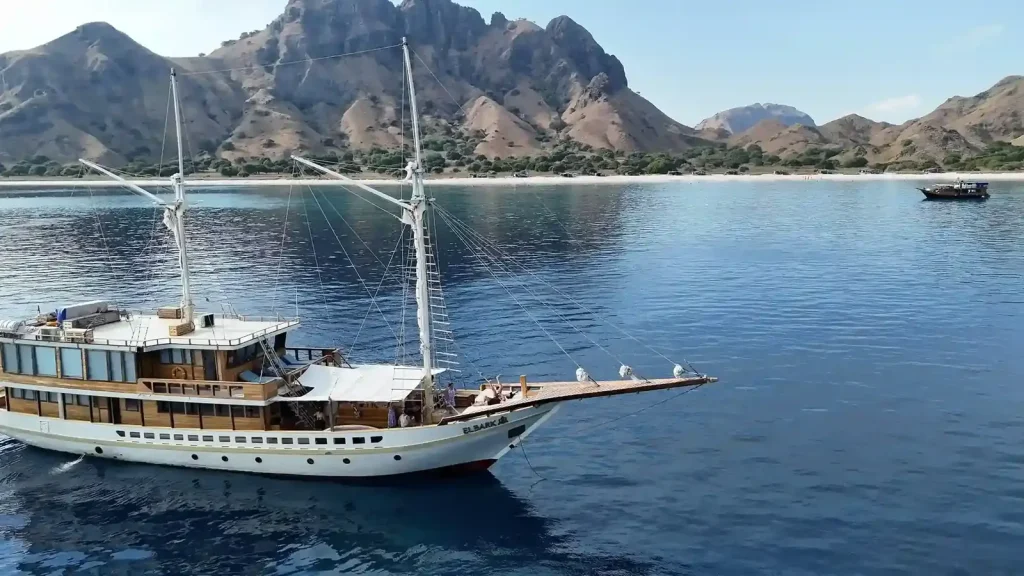
The final six months of construction are the versatility of the Phinisi as a platform for bespoke luxury. With the heavy construction complete, a new team of artisans arrives to transform the wooden shell into a floating boutique hotel. This finishing stage is often the most time-consuming and variable part of the build, where the owner’s vision is brought to life in meticulous detail. Fine teak or ironwood flooring is laid and polished, walls are paneled, and custom-built furniture is installed. The complexity can be immense; a single master suite might feature hand-carved cabinetry, imported Italian marble in the bathroom, and a sophisticated lighting system. We’ve seen vessels featured in our press and recognition section that include amenities like dedicated dive centers, wine cellars, and even outdoor cinemas. This is where collaboration with our network of verified partners, from interior designers to audiovisual specialists, becomes crucial. The final touches—upholstery, linens, galley appliances, and the all-important installation of the sails and rigging—are completed. The vessel is then launched into the sea, often using a traditional beach launch method that is a spectacle in itself, before undergoing weeks of sea trials to fine-tune its performance and systems, preparing it for its maiden voyage into the waters of Komodo National Park.
Quick FAQ on the Komodo Boat Building Process Timeline
How fixed is the 18-24 month timeline?
The timeline is a highly reliable estimate but can be influenced by several factors. The primary variable is customization. A highly bespoke interior with rare materials or complex technical systems can add 3-6 months to the finishing stage. The monsoon season (typically November to April) can also cause minor delays, particularly during the hull construction phase if heavy rains persist. However, experienced builders factor this into their initial projections.
What are the key cost components tied to the timeline?
The cost of a custom Phinisi, which generally starts around $1.5 million and can exceed $5 million, is distributed throughout the build. Roughly 40% is allocated to materials (primarily timber and engines), 30% to labor, and 30% to the high-end finishing, electronics, and interior outfitting. The labor costs are spread evenly, while material costs are front-loaded, and finishing costs are concentrated in the final third of the project timeline.
Can I visit the shipyard during construction?
Absolutely. Reputable builders encourage owner visits. The best times to witness key milestones are around Month 5 for the keel-laying ceremony, Months 10-12 to see the nearly completed hull, and Months 20-22 to see the interior finishing in progress. A visit provides an exceptional appreciation for the craftsmanship and allows for real-time collaboration on design details.
What is the biggest difference between a traditional and modern build process?
The core difference lies in the integration of technology and standards. The hull construction remains a deeply traditional, hands-on process guided by ancestral knowledge. However, from the superstructure upwards, a modern build incorporates detailed electrical and plumbing plans, naval architect consultations for stability, and adherence to international safety codes like SOLAS. The result is a vessel with the soul of a traditional Phinisi but the safety, comfort, and amenities of a modern superyacht.
The journey of a Phinisi from a forest in Kalimantan to the turquoise waters of Komodo is a story of tradition, patience, and extraordinary skill. It is a process that cannot be rushed, a timeline dictated by seasons and artistry. Understanding this journey deepens the appreciation for the magnificent vessel that awaits you. To begin charting your own course and explore the possibilities of a custom-built Phinisi, we invite you to learn more about the top-tier services offered by komodo boat construction.